








































































At the beginning of April, British climate NGO Sandbag published a press release entitled “For the first time, 4 out of 5 largest EU emitters are German lignite producers.” A shift took place between the fifth and sixth positions because the British Drax coal plant increasingly runs on imported biomass. Craig Morris says paying more attention to producers and less to consumers would help us see the issue in a clearer light.
All posts tagged: Germany
German utilities split over modest coal clamp-down
The German government wants to limit emissions from coal plants that are more than 20 years old. Why the age demarcation? Why not just limit total emissions – or phase out coal entirely? Craig Morris says some clever Realpolitik is behind it. Best of all, it’s working.
Counting carbon from the source
We need to leave carbon in the ground. Yet, carbon emissions are counted at the source of consumption, not the source of extraction. Craig Morris says the different approach would put countries like Scotland, Norway, and Denmark in a much different light.
Climate showdown: Has the US, UK or Germany done more to cut emissions?
The UK and Germany like to think of themselves as climate leaders. But how does their progress in cutting carbon stack up against the US, which has famously failed to pass climate laws? The Carbon Brief’s Simon Evans reports.
Energiewende shuts down most efficient gas turbine
Siemens spent half a billion euros developing the most efficient gas turbine in the world. Last year, it sold no electricity at all, but was only used to stabilize the grid. Now, the unit is to be taken off the market and put into standby reserve next year. Craig Morris says the story shows how important it is not to confuse engineers with policymakers.
German fracking law takes shape
Two weeks ago, the German government sent its bill for shale gas production to Parliament for approval. And once again, we read both that Germany has banned and approved fracking. Craig Morris explains what is really going on.
The Energiewende – made in the USA
To many people, both inside and outside Germany, the Energiewende seems special. Questions therefore often focus on where the Germans got the idea. Craig Morris says they stole it from an American.
The magic of efficiency revealed
Germany aims to reduce its energy consumption by 50 percent by 2050 relative to 2005. It sounds like a fanciful target, especially if the country continues to grow economically. But in reality, Craig Morris says, there are two simple steps to this goal, which do not seem so magical once you know them.
What energy democracy looks like
One of Germany’s political foundations, the Rosa Luxemburg Foundation, has produced a video in English explaining the term “energy democracy” to North Americans. It was made in cooperation with labor unions and thus focuses on job creation. Craig Morris likes the presentation but fears some main points might not be highlighted enough.
Berlin hosts first international governmental conference on the Energiewende
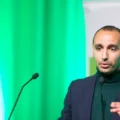
On March 26 and 27, the German Foreign Office held a high-level conference on the Energiewende in Berlin, subtitled “towards a global Energiewende.” Energy Ministers and Foreign Ministers from a number of countries attended. Craig Morris reports.