


In recent years, natural gas, often rebranded as fossil gas, has gained prominence in Mexico and Central America as a supposed ‘transition fuel’. This narrative suggests that natural gas can serve as a temporary replacement for more polluting fossil fuels such as coal and oil, facilitating a gradual shift toward renewable energy. Yet this framing is increasingly challenged by environmental organisations and affected communities, who argue that the expansion of gas infrastructure establishes a new geopolitical and environmental dependency, particularly on the United States of America. As the US becomes the world’s largest exporter of liquefied natural gas (LNG), its influence over regional energy systems deepens, reshaping both national strategies and regional vulnerabilities. Marco Pernavarre reports.
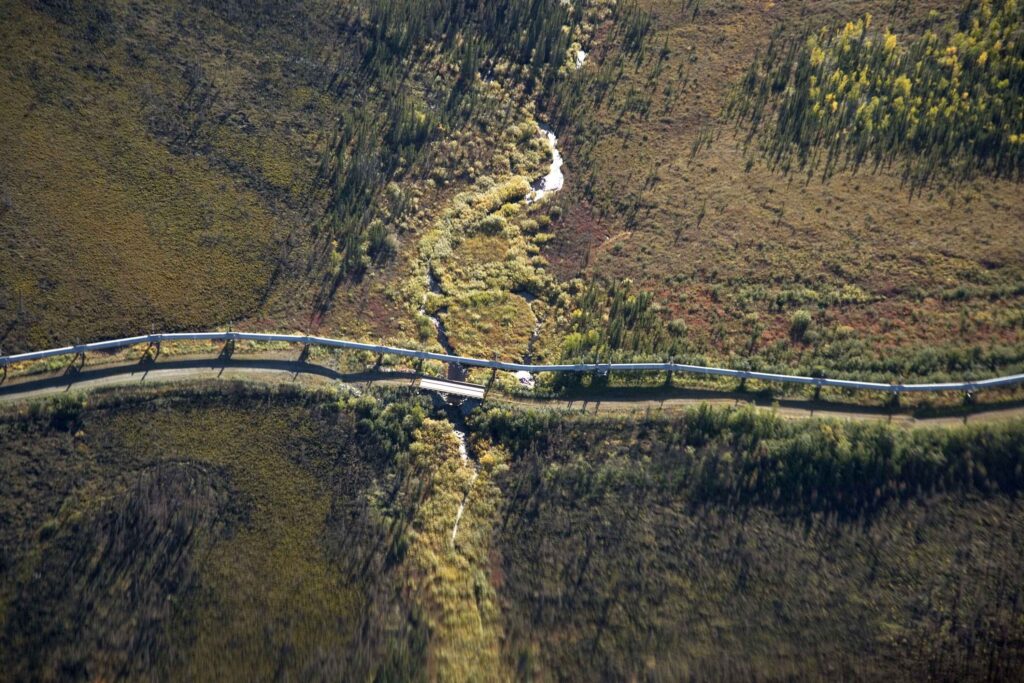
Advocates of natural gas emphasise its lower carbon emissions compared to coal and oil. Several studies highlight that gas-fired electricity can reduce short-term emissions and support grid stability as renewable penetration increases. Governments in Mexico and Panama often use these arguments to justify new pipelines, LNG terminals and gas-fired power plants: one for almost 30% of US natural gas exports, and the other as an strategic path between oceans. However, critical analyses warn that natural gas remains a non-renewable and climate-altering fuel whose infrastructure locks countries into decades of future consumption. Moreover, methane leaks, common throughout the gas supply chain, undermine claims of climate benefits, as methane has a global warming potential far higher than CO₂ in the short term.
Mexico and Central America: a (near) future with multiple threats.
In Mexico, policymakers have repeatedly described gas as an indispensable bridge toward a cleaner energy system. The state’s dependence on US gas imports has grown sharply over the last decade, in part due to the expansion of cross-border pipelines. Today, more than 70% of Mexico’s gas supply originates in the US, creating structural vulnerability. This reliance exposes Mexico to price volatility, foreign political decisions and criminal influence from drug cartels looking for territory control.
At the same time, PEMEX (Petróleos Mexicanos / Mexican Petroleum) remains central to Mexico’s bet on fossil gas considering it still controls large parts of upstream production, midstream infrastructure and domestic supply contracts. The company’s pipelines, field projects and fiscal contributions shape national planning: the state leans on PEMEX to increase gas output and to substitute costly imports, making political decisions to prioritise an extractivist business model rather than distributive clean energy transition. Additionally, new LNG import terminals on the Pacific coast, criticised for diverting investment away from a real energy transition and representing a maximum threat to an entire ecosystem, are an example of a false solution in capital letters.
As a complex region, Central America faces a difficult energy transition taking into account several aspects. Its power systems are fragmented and aging, grid and transmission bottlenecks limit integration of variable renewables, and uneven policies, limited financing and institutional capacity make large-scale deployment and cross-border coordination hard. Only Costa Rica, even when its political context is turbulent, seems to follow a plan for national decarbonisation, but the rest of the countries are obstructed due to structural violence, unstable politics and high levels of corruption. No matter how difficult times are for them, countries like El Salvador and Nicaragua have explored and operate LNG imports as a means to diversify their energy matrices or reduce diesel use in industry and transportation. Yet these nations risk subordinating their energy security to external suppliers and multinational gas companies. Energy dependence becomes especially problematic given Central America’s limited fiscal capacity to absorb future price shocks or renegotiate long-term gas contracts under weak democracies.
The usual dilemma: impacts of the ‘energy transition’ under economic schemes
The notion that fossil gas is a “clean” or “sustainable” option is increasingly questioned in scientific literature. Studies on environmental health show that combustion of natural gas continues to generate nitrogen oxides and particulate matter, contributing to respiratory and cardiovascular diseases. Infrastructure such as pipelines and storage facilities also pose leak risks and safety concerns, affecting nearby communities. In Mexico and Central America, proposed LNG terminals near coastal and densely populated areas raise additional concerns regarding environmental degradation, air pollution and potential harm to tourism-based local economies.
Beyond local health impacts, natural gas infrastructure creates ‘carbon lock-in’ that delays the adoption of renewable energy. Different analyses warn that once gas pipelines and power plants are built, governments like the US and international investors face economic incentives to maintain their operation for decades, sidelining wind, solar and geothermal alternatives. In Mexico, the prioritisation of gas-fired plants by the Federal Electricity Commission (CFE) has directly constrained the expansion of renewable projects, despite the country’s substantial potential in solar and wind energy. Similar patterns appear in Central America, where ambitious renewable agendas risk being undermined by short-term enthusiasm for imported LNG.
Ecologically, the impacts of gas extraction and transportation extend far beyond combustion. Methane leakage in US shale fields, where most exported gas to the region originates, significantly contributes to global climate change. As Mexico and Central America import this gas, they indirectly sustain environmental degradation across North American extraction zones. Furthermore, LNG production and shipping emit considerable greenhouse gases, meaning the apparent “cleanliness” of gas diminishes once full life-cycle emissions are considered.
There are also concerns regarding biodiversity loss and socio-environmental conflicts. Areas designated for gas infrastructure, such as coastal zones, mangroves and marine habitats, are often ecologically fragile and home to vulnerable communities. Indigenous and Afro-descendant groups, usually marginalised in their own territories, warn that fossil gas projects replicate historic patterns of exclusion, lack of consultation and land dispossession, undermining the principles of a just energy transition.
Ultimately, the growing reliance on US fossil gas threatens to reproduce dynamics reminiscent of past energy dependencies in Latin America, where countries relied heavily on foreign oil companies or externally controlled supply chains, slowing down any opportunity for energy transition. A transition based on gas risks delaying the shift toward renewable and decentralised systems that could empower communities and enhance true energy sovereignty. Scholars and civil society organisations are increasingly calling for a re-evaluation of regional energy policies to avoid repeating extractivist models, this time under the guise of “cleaner” fossil fuels.
A genuinely sustainable and just energy transition for Mexico and Central America must therefore prioritise renewable energy deployment, community-centred governance and the gradual dismantling, not reinforcement, of fossil fuel infrastructure. Without a decisive shift in policy, the region risks locking itself into a new era of US-controlled energy dependence at the very moment when autonomy and resilience are most urgently needed.
The views and opinions in this article do not necessarily reflect those of the Heinrich-Böll-Stiftung European Union | Global Dialogue.