



















































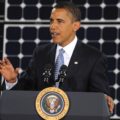



















India’s solar capacity grew rapidly, but the WTO agreed to a ruling against the country’s ambitious solar program.
Archives
It’s time to decrease energy consumption in Mexican buildings
In Mexico, energy consumption in buildings are still very high. Lillian Sol Cueva shows how two sets of measures could considerably reduce Mexico’s energy consumption.
Can utilities be trusted with the energy transition?
Utilities that invest heavily in renewables outside of their territory often show little interest to do so at home. Craig Morris takes a look.
Germany – a nuclear fusion leader
The news of the recent successful plasma experiment at a nuclear fusion research facility in Germany went wild on social media, but a lot of people wondered what kind of sense it makes for a country with a nuclear phase-out to be conducting research in nuclear fusion. In fact, Germany is a leader in nuclear fusion in two ways. Craig Morris explains.
Low oil prices hit German pellet giant
A company called German Pellets has filed for insolvency. As recently as 2013, it was the largest pellet producer in the world. Low oil prices were given as one reason for this development, but that’s not all. Craig Morris reports.
Gas makes a (small) comeback in Germany
Natural gas is considered a better complement to wind and solar power than coal or nuclear both in terms of the flexibility of gas turbines and carbon emissions. But gas prices in Germany have remained high in recent years, and the carbon price has been too low to incentivize a switch from coal to gas. Now, there are signs that gas turbines are once again profitable. Craig Morris reports.
Lignite in the Greek energy system: facts and challenges
The Greek energy system is still relaying to a large extent on lignite power plants. Apart from the known negative impacts on public health, an increasing number of proposed projects will have a negative return on investment. Tasos Krommydas reports.
Wind and solar power boom worldwide
Global installation figures are rolling in for wind and PV, and they look fantastic. The future is also bright: the forecast is for further growth. Single countries used to dominate these markets, but increasingly everyone is building. In fact, developing countries now invest more in renewables than the developed world does. Craig Morris takes a look.
2015 was second biggest year ever for wind installations in Germany
We recently wrote about record wind power production in 2015, which was partly due to windy conditions. But a lot of new capacity was also added. Unfortunately, the rush reflects the storm before the calm; the onshore sector in particular fears the switch to auctions. Craig Morris explains.
German government is happy with PV auctions
Two weeks ago, the German Energy Ministry published its official review of the first three rounds of pilot auctions for ground-mounted PV. It is already clear that the policy will be expanded – the shortcomings of the auctions are not even mentioned. Craig Morris investigates.