













































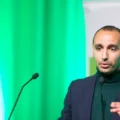







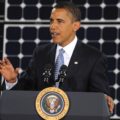




















On Thursday and Friday last week, the German Foreign Office invited dignitaries, business people, and the press to the second Berlin Energy Transition Dialogue. The event was roughly 50 percent larger than in the previous year. And once again, it revealed that not all decision-makers are on the same page when it comes to the global energy transition. Craig Morris explains.
All posts tagged: Solar
The WTO Just Ruled Against India’s Booming Solar Program
India’s solar capacity grew rapidly, but the WTO agreed to a ruling against the country’s ambitious solar program.
Can utilities be trusted with the energy transition?
Utilities that invest heavily in renewables outside of their territory often show little interest to do so at home. Craig Morris takes a look.
Wind and solar power boom worldwide
Global installation figures are rolling in for wind and PV, and they look fantastic. The future is also bright: the forecast is for further growth. Single countries used to dominate these markets, but increasingly everyone is building. In fact, developing countries now invest more in renewables than the developed world does. Craig Morris takes a look.
German government is happy with PV auctions
Two weeks ago, the German Energy Ministry published its official review of the first three rounds of pilot auctions for ground-mounted PV. It is already clear that the policy will be expanded – the shortcomings of the auctions are not even mentioned. Craig Morris investigates.
How Germany helped bring down the cost of PV
A new study published by the Öko-Institut investigates Germany’s historical expenses for renewable electricity – and solar power in particular. In passing, the study highlights Germany’s contribution to the current low price of solar power worldwide. Craig Morris looks into the matter.
Employment Issues in the Process of Developing Renewable Energy in China
China has by far the most jobs in the renewable energy sector on a worldwide basis. However, during the energy transition, the job losses in the conventional energy cannot be offset by the growing PV market. The Beijing based Rock Environment & Energy Institute (REEI) explains the employment impacts of renewable development in China.
100 percent renewables in 139 countries
Stanford’s Mark Jacobson and Mark Delucchi made headlines at the end of November for their pronouncement that 100 percent renewable energy is possible in most countries. The publication came out in time for the COP 21 conference in Paris. The findings do not overlap with what researchers in Germany publish. Craig Morris explains.
Renewable energy: untapped fuel for Mediterranean economies
Despite the fact that in the sunniest region of Europe there is a vast potential of energy from the sun (and wind), renewable energy is a resource that is being ignored. In a time when Southern European countries are struggling with debt and stagnating economies, clean renewable energy solutions can be a smart way to go. Expert studies commissioned by Greenpeace Croatia, Greece, Italy and Spain show how the Southern European governments can boost their economies, reduce greenhouse gas emissions and accelerate their energy transition by enabling massive small-scale investments into renewable energy and energy-efficient solutions. Dejan Savic summarizes the findings.
What will the Energiewende cost?
Researchers from Fraunhofer ISE have published a new report investigating the net cost of Germany’s energy transition. The good news is that the German government’s current goals are likely to be affordable. The bad news is that 100 percent renewable energy is less so.