


In the global race toward decarbonization, South America stands as both a beacon of potential and a cautionary tale. Brazil, Argentina and Chile, three nations often heralded as leaders in renewable energy, are now confronting a paradox: can an energy transition built on extractivism truly be sustainable? As the demand for “green” minerals such as lithium intensifies, the region’s ecosystems and communities are paying an increasingly visible price. While the global powers demand minerals, the South is barely able to support its most vulnerable populations. Are we witnessing a genuine transformation, or merely a rebranding of old extractive models under a greener illusion? Marco Pérez-Navarrete reports.
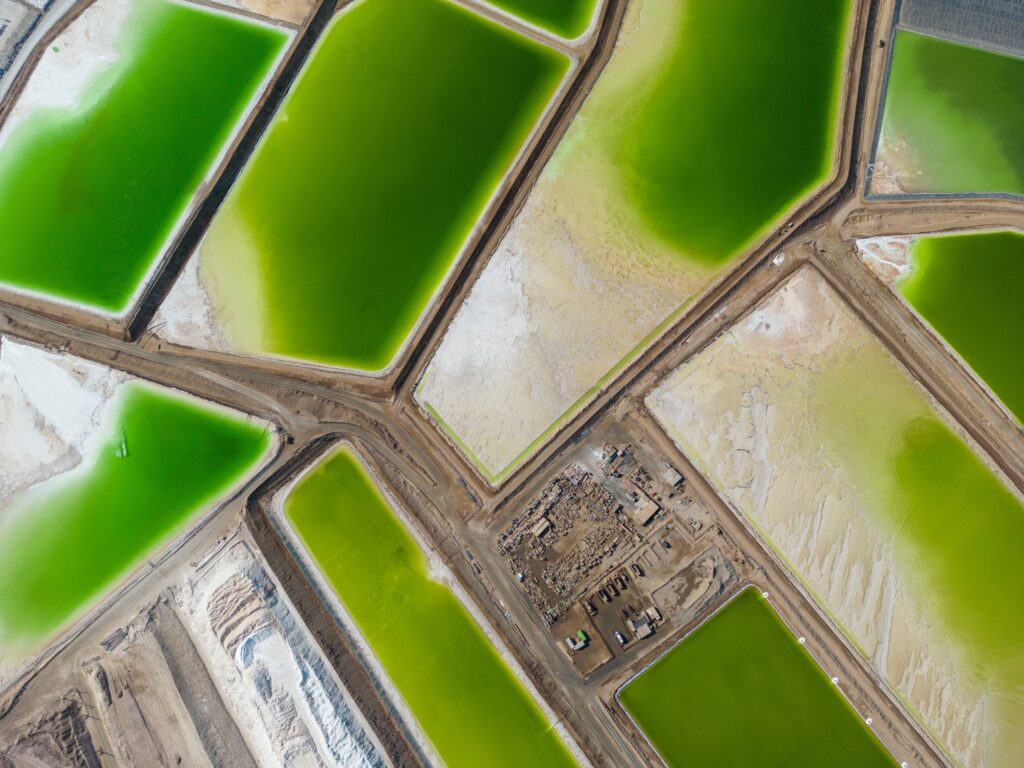
Freedom_wanted | Shutterstock, all rights reserved.
The promise and the paradox of the Lithium Triangle
Stretching across Argentina, Bolivia and Chile, the so-called Lithium Triangle contains more than half of the world’s known reserves of this coveted metal. Lithium, essential for electric vehicle batteries and renewable storage technologies, has been labelled a cornerstone of the global energy transition. Yet behind the rhetoric of progress lies a troubling reality. Studies reveal profound environmental and social costs associated with lithium extraction, particularly concerning water depletion, ecosystem degradation and the rights of Indigenous peoples.
In northern Chile’s Atacama Desert, lithium extraction consumes vast quantities of groundwater, an irreplaceable resource in one of the driest places on Earth. Similar concerns have emerged in Argentina’s salt flats, where Indigenous communities allege that corporate operations have disrupted traditional livelihoods and access to clean water.
The question, then, is not whether lithium is necessary for the energy transition – it almost certainly is – but whether the current extraction model represents a true solution or a false one, perpetuating colonial patterns of resource dependency and inequality.
Argentina: between a new opportunity and a critical extraction
Argentina’s northwestern provinces, such as Jujuy and Salta, have become hotspots for international investment. The government promotes lithium mining as a pathway to economic modernization and global relevance. Yet local communities tell another story. Reports describe conflicts over land rights, inadequate consultation processes and a lack of transparency in benefit-sharing mechanisms.
Recent analyses question whether the purported socioeconomic benefits outweigh the ecological and cultural costs. Indigenous leaders argue that “green” exploitation of lithium still follows the extractivist logic that has long characterized the region, profiting multinational corporations while marginalizing local populations. Meanwhile, scholars note that the state’s regulatory framework remains insufficient to guarantee environmental safeguards or equitable participation.
If the energy transition is to be just, can Argentina continue down this path without rethinking ownership, governance and distribution of its mineral wealth? The current government seems to have taken a critical path: open for international business at the expense of its own country.
Chile: the green illusion in the desert
Chile markets itself as a model of ‘responsible mining’. Yet, in the Atacama Desert, satellite imagery and community testimonies reveal another picture: brine evaporation ponds expanding across Indigenous lands and fragile ecosystems. Water scarcity has deepened, threatening local wildlife and the livelihoods of Atacameño communities, who have lived in harmony with the desert for centuries.
Despite ambitious pledges of sustainability, critics argue that Chile’s lithium boom is simply a case of ‘green extractivism’ that externalizes environmental costs to Indigenous territories. The contradiction is striking: while lithium exports help global markets decarbonize, they simultaneously threaten local water security. Is this the price of progress, or evidence of a system unable to reconcile environmental goals with social justice?
Brazil: biofuels, hydrogen and the question of greenwashing
While Brazil does not share the same lithium reserves, its energy transition narrative follows a comparable trajectory. The nation has long promoted biofuels as a “clean” solution. However, critics point out that ethanol and biodiesel production often expand agricultural frontiers, driving deforestation and rural displacement. The country’s emerging hydrogen agenda, too, risks prioritizing export-oriented megaprojects over localized, inclusive energy systems.
Are these initiatives truly about decarbonization, or do they serve as “green” veneers for extractive development models? In Brazil’s case, the question becomes more complex as energy corporations rebrand themselves as sustainability pioneers while maintaining practices that intensify inequality and ecological stress. The Brazilian scenario warns us that ‘renewable’ does not automatically mean ‘just’.
The complex face of transition
Behind each megawatt of clean energy lies a web of human experiences. From Andean shepherds losing access to ancestral lagoons to rural workers displaced by biofuel monocultures, the energy transition has life costs often hidden behind promises of global sustainability. In the Lithium Triangle, these costs are amplified by the lack of transparent consultation processes and the cultural erasure of Indigenous voices.
Organizations across the region are increasingly calling for a redefinition of progress, one that centres human rights and ecological integrity rather than commodity exports. The idea of a ‘just transition’ must therefore go beyond technology and GDP growth. It must confront the uncomfortable truth that so-called green solutions can reproduce the same patterns of exploitation they claim to resolve.
Global corporations have rushed to secure lithium supply chains, promising ethical sourcing and transparency. Yet independent investigations expose discrepancies between corporate rhetoric and on-the-ground realities. While companies highlight their environmental standards, local communities report minimal consultation and compensation. The gap between discourse and practice raises critical questions: can ethical mining exist in regions where governance is weak and environmental oversight limited?
If South America is to avoid the trap of green extractivism, the region must redefine what ‘energy transition’ means. It cannot simply substitute one raw material for another, nor can it prioritize foreign markets over local needs. True transformation demands democratic participation, technological diversification and respect for territorial rights.
As some scholars argue, the energy transition should not be seen as a technological inevitability but as a political pro-ecological choice, one that determines who benefits, who sacrifices and who decides. The lesson emerging from Brazil, Argentina and Chile is clear: sustainability without justice is merely another illusion.
The green future imagined by global markets depends on resources extracted from regions such as South America’s fragile ecosystems. Yet the evidence suggests that current practices may be leading not to decarbonization, but to new forms of dependency and degradation. In fact, there is a displacing of emissions and injustices from one geography to another.
The answer lies in reimagining the transition not as an industrial race, but as an ethical project: one that values ecosystems as much as economies and recognizes local communities’ stewardship not as an obstacle, but as a guiding principle for planetary survival.
The views and opinions in this article do not necessarily reflect those of the Heinrich-Böll-Stiftung European Union | Global Dialogue.