






















































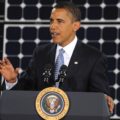




















Presumptive Democratic party presidential candidate Joe Biden has released an ambitious $2 trillion energy and climate plan that will, if implemented, create not only millions of well-paying jobs, but place the nation on a mid-century carbon neutrality pathway. Calling for a massive investment in solar and wind capacity, Biden aims for a coal exit and elimination of carbon pollution by 2035. More than just an energy and climate platform, Biden’s plan reckons with ensuring a just transition for affected coal and gas producing regions, while directing support towards impacted poor and minority regions so often in the smokestack shadows. Far from perfect, Biden’s plan would at least begin to stop the world’s top polluter from taking us all over the climate cliff.
Archives
Woody addiction: Biomass is the UK’s dirty little secret to getting clean
Lauded internationally for reducing its coal dependency and cleaning up its economy, the United Kingdom’s energy transition has a dirty little secret: biomass. Misclassified as renewable and carbon free, tallying the biodiversity and environmental impacts of burning biomass depends on nuance: how tight the regulations are, how fast a forest can grow back, and how well you can tweak your numbers. Now the world leader in burning trees to make electricity, scientific evidence is piling up questioning biomass’ claims to climate neutrality. A new study by energy thinktank Ember, The Burning Question, alongside other ongoing citizen climate campaigns, demands London curtails future subsidies while tightening biomass’ dubious carbon loophole. L. Michael Buchsbaum reports.
Europe must take ambitious lead in green hydrogen – German govt advisor
Europe’s economy is well placed to benefit from the fledgling global hydrogen economy and should decisively follow through with its hydrogen strategies, says Veronika Grimm, a member of Germany’s council of economic experts, one of the country’s most important advisory committees. “We are in a very strong position in Germany and Europe when it comes to hydrogen and synthetic fuels, and we should keep that advantage,” Grimm told Clean Energy Wire. “It’s very important to create, on an ambitious timeline, the energy policy framework conditions that make hydrogen-related investments attractive for european companies,” said Grimm, who is also a member of Germany’s freshly launched hydrogen council dedicated to supervising the implementation of the country’s recent hydrogen strategy. In this interview, Grimm talks about her expectations for a global hydrogen economy, its implications for industries across the globe, and why she thinks the coronavirus crisis might speed up the transition rather than slowing it.
Moscow cries foul over EU’s planned carbon border tax
Russia’s economic development minister warned last week that the EU’s plans to deploy a carbon tax at the bloc’s borders will not be in line with World Trade Organisation (WTO) rules, just as Brussels doubled down on the idea of green tariffs. Sam Morgan reports for EURACTIV.com
Go green or get out? The impact of an EU carbon border adjustment on third countries
The European Union (EU) is planning to tax carbon-intensive products as a strategy to decrease global emissions and avoid carbon leakage. But will exporters be able to adapt? Lilia Maximova, Gabriela F. Kilpp, Natalia Koto, and Bárbara Martins take a look.
The IEA Won’t Budge: Fossil fuels, nuclear, and carbon capture remain key to innovation strategies
Despite so much criticism directed at the International Energy Agency (IEA) over the years, the Paris-based intergovernmental organization, which was established in the framework of the Organisation for Economic Cooperation and Development in 1974, refuses to seriously rethink its affinity to fossil fuels and nuclear power – and its timid embrace of renewables.
Hydrogen…yet again
After much anticipation, the European Commission introduced ‘A hydrogen strategy for a climate-neutral Europe’ to pave the way for “the missing link in the energy transition. This was prompted by an understanding that an energy transition reliant solely on electricity as an energy carrier will not allow the EU to decarbonise its entire energy system. This has ushered in the Commission’s second attempt to facilitate the diffusion of the energy carrier, following its launch of a high level group on hydrogen in 2003 – to little avail. However, this time the reinvigoration of the fuel just might be right. John Szabo takes a look
Clean mobility lags behind in Latin America
The transportation sector in Latin America is still largely based on fossil fuels and responsible for 35 percent of the continent’s carbon emissions. Greening public transportation systems is an issue predominantly for a few wealthier cities. But many remain highly inefficient, insecure and in the hands of powerful transportation mafia-like groups, which make them a difficult subject for reform. Yet the main hurdle for developing a sustainable transportation concept in many Latin American countries is the disconnect between national and municipal policies on transportation and energy policy. Rebecca Bertram reports
Amidst coronavirus, conditions in South Africa are ideal to fast-track renewables
As the South African government prepares to inject a stimulus package equivalent to 10 per cent of its GDP into the economy to aid recovery from the coronavirus recession, energy analysts say the time is right to fast-track renewable energy. More than state-funded investment, though, this will need political will and policy that builds private-sector confidence. Leonie Joubert reports.
swiss imatation watch online in high quality.
Read More
Gender awareness: Energy efficient housing through gender-responsive measures. Pt. II
Energy usage within households occurs in various forms, whether it is about heating, cooking or the use of electrical appliances. Comprehensive data on household energy consumption is already trying to paint a more accurate picture of its consumers. However, one important factor often does not receive the attention it deserves: gender. In the second part of the series, Kathrin Meyer explains how energy efficiency in the housing sector is wasted due to inadequate consideration of gender-responsive measures.