









































































With all of the grim news coming from the US and other places where climate protection is on a backfoot, it’s heartening to cast a glance at the EU’s Emissions Trading System, or EU ETS. Once considered a dud, this carbon market is now the EU’s most potent weapon in reducing greenhouse gas emissions. Paul Hockenos reports.
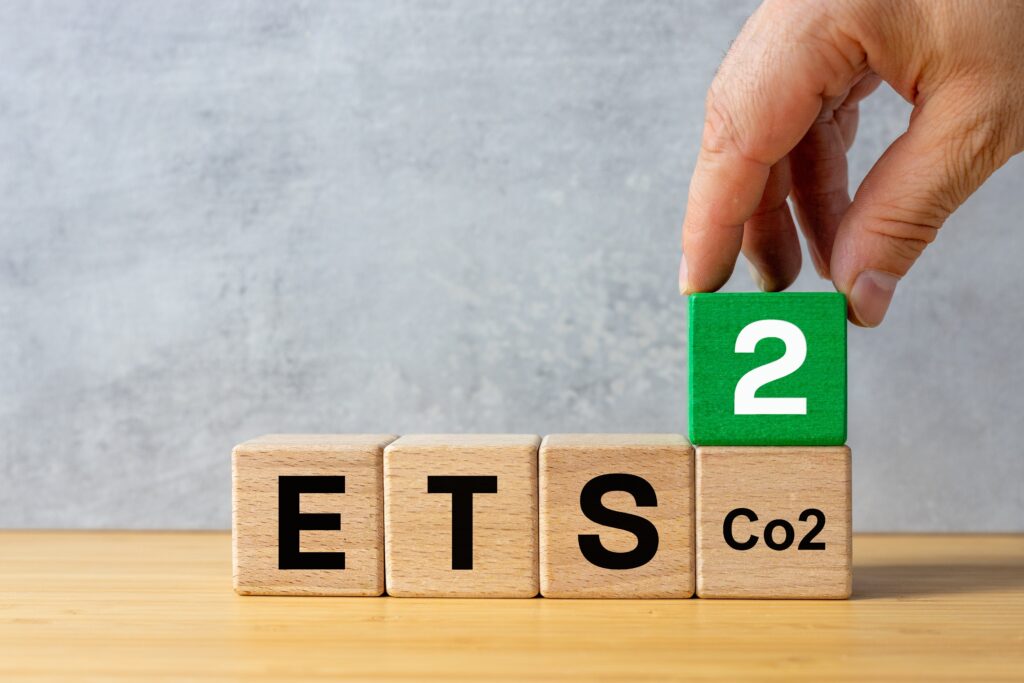
Credits: Andrzej Rostek | Shutterstock, All rights reserved.
Last year, emissions were nearly 50 percent less than twenty years ago when EU ETS was launched. This puts the EU on track to meet its 2030 target of a 62 percent reduction of greenhouse gas emissions from the power, industry, shipping and aviation sectors that are covered by the ETS. But its rigour has it under fire, too.
The very welcome news about the EU ETS in 2024 is that it is proving transformative in Europe’s transition away from fossil fuels and toward renewables. Emissions from stationary installations and aircraft operators, the latter which participated for the first time, fell by about 5 percent from 2023 to 2024, enabling the EU to halve its emissions under the ETS since 2005. Moreover, the EU reduces the cap each year so that the total allowable tons of greenhouse gas emissions declines over time, which bodes well for the future. Monitoring and reporting for the new ETS 2 – covering emissions from buildings and road transport – began in 2024.
Key developments
The EU ETS is a cap-and-trade system whereby the European Union sets a limit (cap) on the total amount of greenhouse gases each participating industry can emit. While each industry gets (buys or receives) a certain number of ’allowances’ that permit it to emit a set amount of pollution, some will easily meet the cap and others won’t. For these greater polluters, the cap-and-trade system allows the lesser polluters to trade or sell unused allowances to them enabling industries such as steel and cement to meet the cap. This makes ETS a market-based mechanism to reduce emissions cost-effectively.
For 2026, the EU has further reduced the overall limit by 90 million allowances, which equals 90 million tonnes of carbon dioxide equivalent. Operational since 2005, the system covers major sources such as power plants, industrial facilities, and now airlines and the maritime sector. Emissions trading, once thought to be a dud, is central to the EU’s strategy for climate action and achieving climate neutrality by 2050.
The inclusion of the maritime sector constitutes a new win for EU ETS. As of 2024, the mechanism covers half of emissions from vessels arriving from outside the EU as well as for ships departing to non-EU ports. As with other industries, shipping companies must now purchase emission allowances and surrender the required allowances necessary to meet their cap. The EU ETS directives specify emissions from large ships calling at EU ports, which may necessitate the additional purchase of allowances from less polluting industries. Energy-intensive industries, shipping included —huge emitters of tons of CO2 – will need to invest in cleaner fuels and technologies to meet the new requirements. As in other sectors, the objective is to create a financial incentive for the sector to reduce its carbon footprint and to contribute to the overall goal of reducing EU emissions.
Revenue generation
In 2024, EU ETS auctioning revenues sent €39 billion in the Union’s coffers – less than the €43.5 in 2023 as a result of a lower per ton price (see graph). But, nevertheless, that’s a lot of money to push the Energiewende forward.
And the revenue was distributed along the lines of payouts: largely to the Member States (€33 billion) for climate investments; €5.6 billion went to the Modernisation Fund, which supports the modernisation of energy systems and the improvement of energy efficiency in lower-income EU states; €1.7 billion to the Innovation Fund, which aids all EU states innovate in low-carbon technologies and processes; and about €3 billion to the REPowerEU programme, which supports the switch to renewable energy as well as energy savings and limits EU dependence on Russian fossil fuels.
Backlash
The EU ETS, however, is not chugging along with wind at its back. It is being challenged. The ongoing backlash in the EU against green policies has energy-intensive industries and certain industry lobby organisations, as well as many politicos, baying for a break. In particular, Poland, Estonia, Bulgaria, and Slovakia state clearly that they don’t want the second carbon emissions trading scheme, ETS 2, which will cover and address the CO2 emissions from fossil fuel combustion in buildings, road transport, and additional sectors, mainly small industry not covered by the existing EU ETS.
Moreover, the European Trade Union Confederation has expressed legitimate concern that ETS 2, which will go into force in 2027, could significantly jack up fuel and energy prices for low-income households. Policymakers should now be addressing what can be done to provide social safeguards that protect the most vulnerable consumers while sending the relevant carbon-price signal to the markets.
Germany however already has much of what the rest of the EU will get with the EU ETS 2. In 2024, Germany surged forward in its complementary markets: its national emissions trading system nEHS includes heating and transport, and since 2024, CO2 emissions from waste incineration plants.
It’s hardly a secret now that emissions trading works to cutback carbon footprints. According to the International Carbon Action Partnership (ICAP), an international forum for governments and public authorities that have implemented or are planning to implement emissions trading systems, governments worldwide are increasingly embracing emissions trading as a key part of their policy response to the climate crisis. ICAP counts 36 systems are in force globally, with an additional 22 in various stages of consideration and development.
It is right that Europe as a leading emitter, both historically and currently, leads the way: it is the forerunner and path blazer for these other systems. Emissions trading systems elsewhere won’t look exactly like Europe’s, nor should they necessarily. But they can learn from the European model, adjusting along the way to construct their own.
The views and opinions in this article do not necessarily reflect those of the Heinrich-Böll-Stiftung European Union | Global Dialogue.